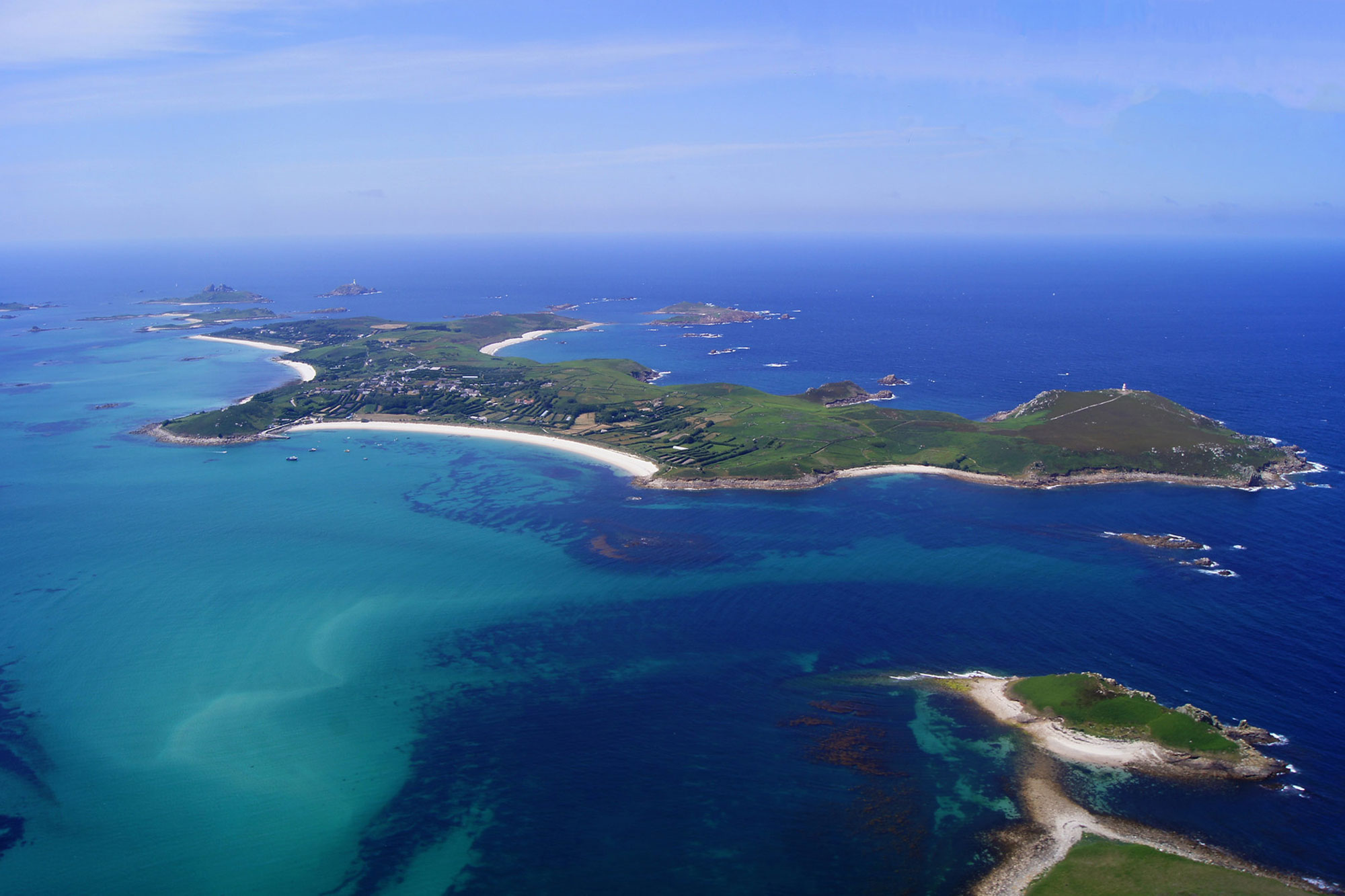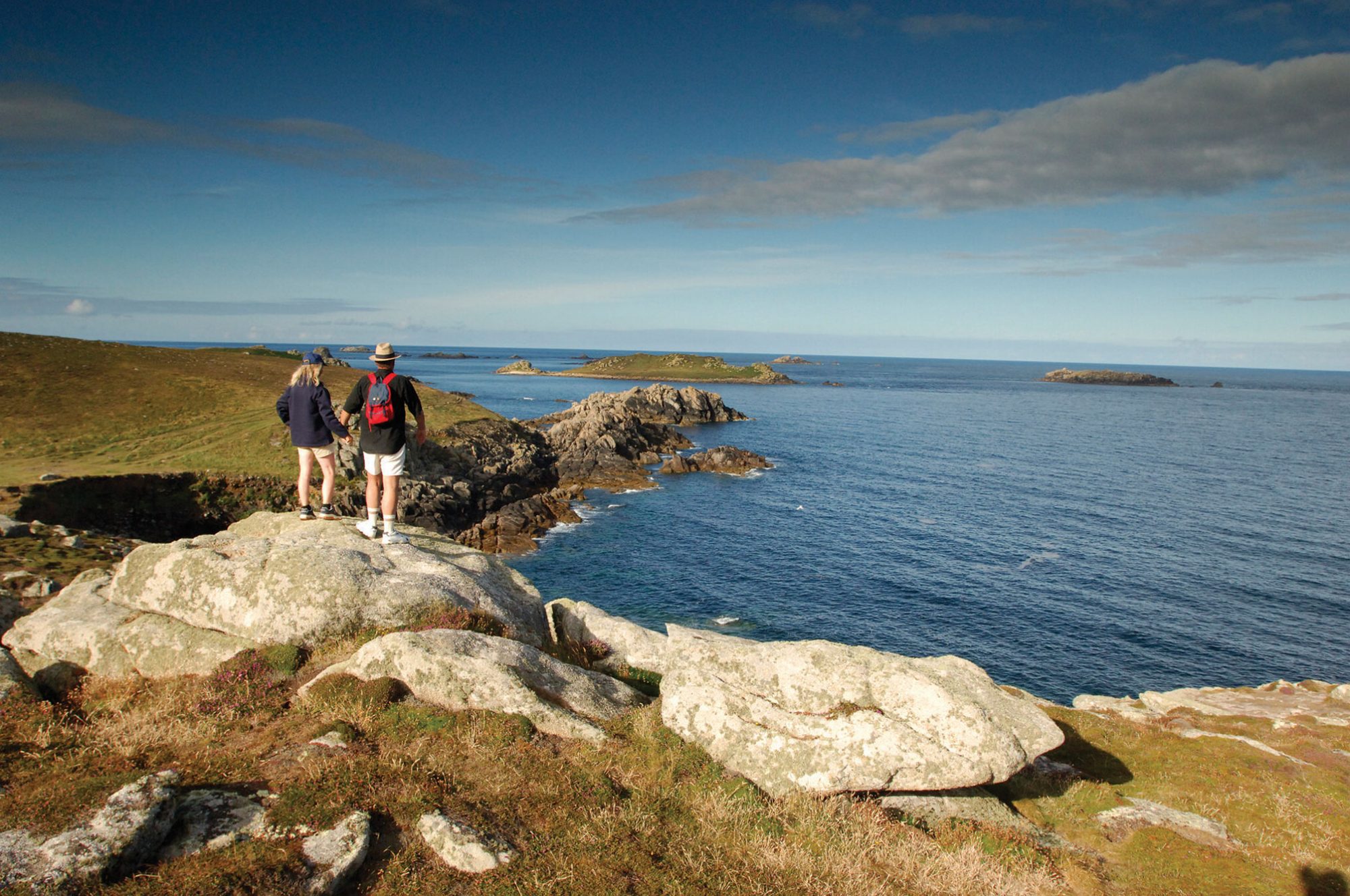
There’s a particular magic to the Isles of Scilly that feels just slightly out of step with the rest of the world. Out here, 28 miles off the Cornish coast, the sea isn’t just scenery, it’s the dividing line between the inhabited and the untouched. And if you really want to understand Scilly at its most elemental, you don’t stay on the main islands. You go further out, to the uninhabited isles where nature quietly runs the show.
Only five of the islands are now inhabited, leaving about 140 uninhabited. Some of these uninhabited islands, that offer a haven for wildlife, especially seabirds, are often frequented by day boats, whilst others are purposely left completely alone.
Stepping Beyond the Edge of Everyday
Most visitors arrive on St Mary’s, the hub of the islands, and soon find themselves island-hopping. But while places like Tresco or St Martin’s have life, cafés, and gardens, it’s the uninhabited islands that begin to shift your sense of time altogether.
These are places without shops, roads, or permanent residents,just landing beaches, seabirds, wind, and history half-swallowed by the sea.
The boat ride itself feels like a crossing into something older. The water turns clearer, the human presence thinner, and the islands start to look less like destinations and more like fragments of a wilder past.
Samson – The Quiet Giant
The largest of the uninhabited islands, Samson lies just west of St Mary’s. From a distance it looks gentle: rolling green slopes, pale beaches, and stone ruins scattered like memories. But step ashore and it quickly becomes clear that Samson is a place shaped by absence.
Once home to families who farmed and fished here, it was abandoned in 1855. Now only the outlines remain, the low stone walls, collapsed cottages, and grazing sheep that wander as if they are the only rightful residents.
Walking across Samson feels like moving through a story that has stopped mid-sentence. There’s no noise but the wind and the occasional call of a seabird. It’s easy to forget the modern world entirely.
From the eastern shore, you look back across the channel to St Mary’s, close enough to see life continuing, yet completely separate.
Teän – The Hidden Garden
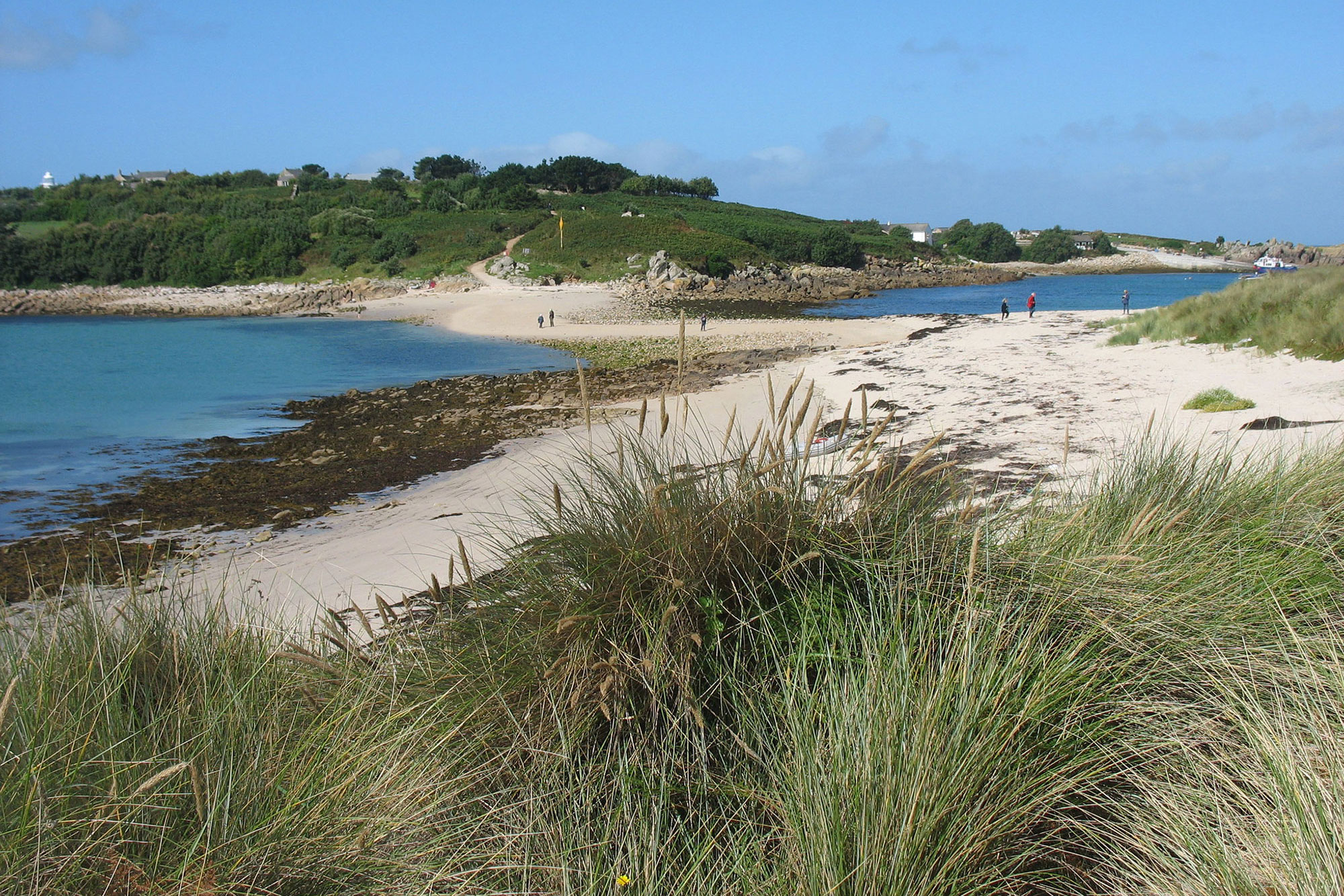
If Samson feels open and exposed, Teän feels secret. Tucked between St Martin’s and Tresco, this small island is a mosaic of habitats: soft white sand beaches, rocky outcrops, and patches of heathland that bloom with wildflowers in spring and summer.
There is no permanent settlement here, but there are traces of ancient habitation, prehistoric field systems, burial sites, and fragments of stonework that suggest people have always been drawn to its quiet shores.
What makes Teän special is its sense of intimacy. You can walk from one end to the other in under an hour, but every corner feels distinct: a hidden cove where the water turns turquoise, a ridge where rabbits dart between the grass, a dune system that seems to shift with every season.
Annet – Sanctuary of Birds
Just off the western edge of St Agnes lies Annet, a protected nature reserve and one of the most important seabird sites in Scilly.
Landing is restricted, and that distance is part of its protection. From the boat you can see why: the island is alive with movement. During breeding season, gulls, shags, and puffins (depending on the year) crowd the cliffs and skerries in a constant, chaotic rhythm of flight and sound.
Even from offshore, Annet feels intense. It’s not a place for wandering, it’s a place for witnessing.
The isolation has preserved it almost completely. No buildings, no paths, no human interference, just a compact, thriving ecosystem set against the Atlantic.
The Eastern Isles – Scattered and Wild
To the east of St Martin’s lies a scatter of rocky outcrops known collectively as the Eastern Isles. Names like Great Ganilly, Nornour, and Little Arthur hint at a past of occasional human use, but today they belong almost entirely to the tides and the birds.
Some islands are little more than granite humps at high tide, vanishing entirely when the sea rises. Others reveal beaches of shell and sand where seals haul out to rest, watching visitors with calm, unbothered curiosity.
Landing here feels less like arriving and more like borrowing a moment. The sea decides how long you stay.
The Shipwrecks of Scilly
Shipwrecks also feature in the history of Scilly and the islands. For example, The Western Rocks are a memorial to the many sailors lost on Bishop Rock, which is a 50m high column of rock, covered completely at spring high tides. On top of it now is the well known Bishop Rock lighthouse, the most south-westerly lighthouse in the UK.
Boat trips are available to see much of the rugged and wild islands, the amazing bird life, the many seals and maybe even a dolphin or two.
What the Uninhabited Islands Teach You
It’s tempting to think of these islands as empty, but that’s not quite right. They are full of life, of history, of presence stripped of human noise. What they lack is permanence. Everything here is in motion: sand shifts, paths disappear, buildings crumble, seabirds arrive and leave with the seasons.
And that impermanence changes how you move through them. You walk more slowly. You speak less. You notice more.
There’s no infrastructure to guide you, no café to aim for, no timetable to follow. Just land, sea, and weather negotiating their boundaries in real time.
Leaving Them Behind
Eventually, the boat returns. St Mary’s reappears, then the mainland beyond it, and the spell loosens.
But the uninhabited islands don’t quite leave you. They linger as a feeling more than a memory. A sense that the world is larger, quieter, and more resilient than it often appears.
And it’s there, in the absence of everything unnecessary, that you find what makes the Isles of Scilly truly unforgettable.